
.webp)






The optic nerve can be atrophied due to glaucoma, some intracranial tumours, or injury. There is no treatment for atrophied Optic nerve for any reason, yet very good control and prevention in case of Optic nerve atrophy due to Glaucoma in modern medicine.
Just want to add visual centres in the brain where all the images formed at the retina in the eyes are situated, just opposite the eyes at the maximum possible distance of eyes. This is in contrast to the other sense organs, such as the ears, nose or tongue. In spite of the fact that in case of accidents, the body has to react in the shortest possible time to protect itself.
My article has been published on this issue, although Modern Ophthalmology has never described or thought about this aspect.
I am not at all any way critical of Modern medicine for not finding treatment for these ailments. Being a graduate of Modern Medicine, I am a proud doctor. Modern Medicine has played a great role in eye care and treatment of blindness, as in the case of cataract, nutritional causes of blindness, eye infections, blindness due to defects in the cornea and treatment of squint. Here just want to add that eye donation is not retina donation, but it is for the donation of the cornea only.
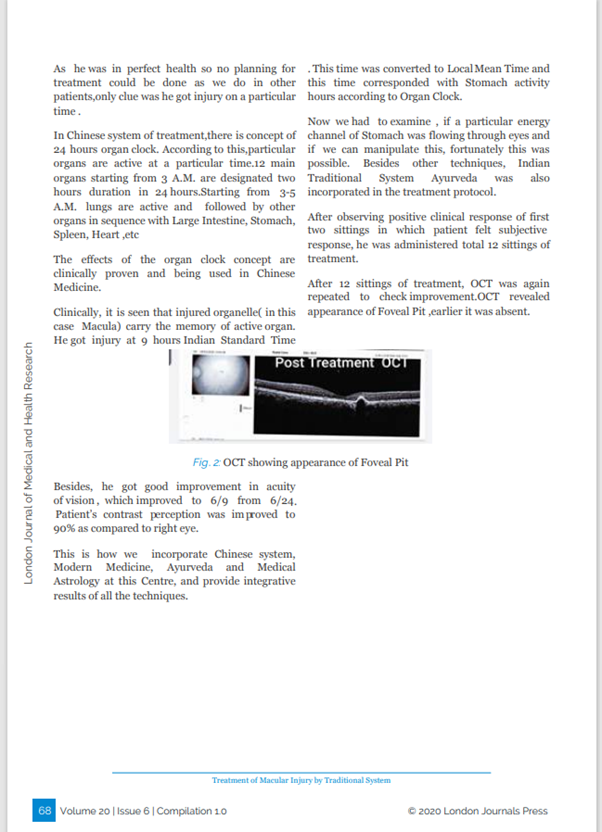
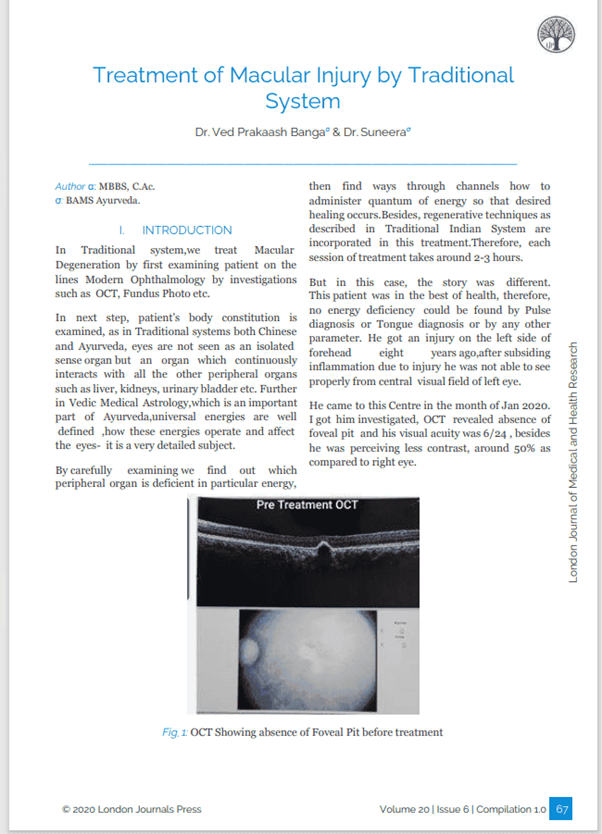
Diagnosis in eye care has been improved unimaginably. Investigations, such as Visual Field tests, O.C.T., and E.R.G have revolutionised to know the exact reasons behind the loss of vision.
These tests have built confidence in Treatment here at Acu Eye Zone, as you can see and compare changes in these parameters.
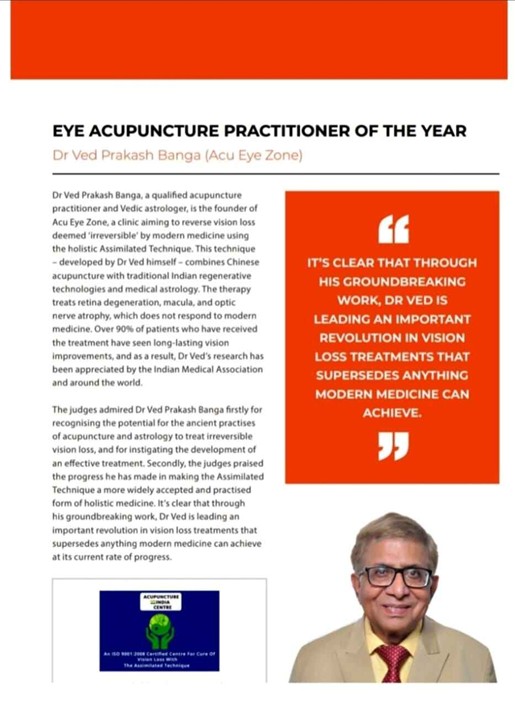
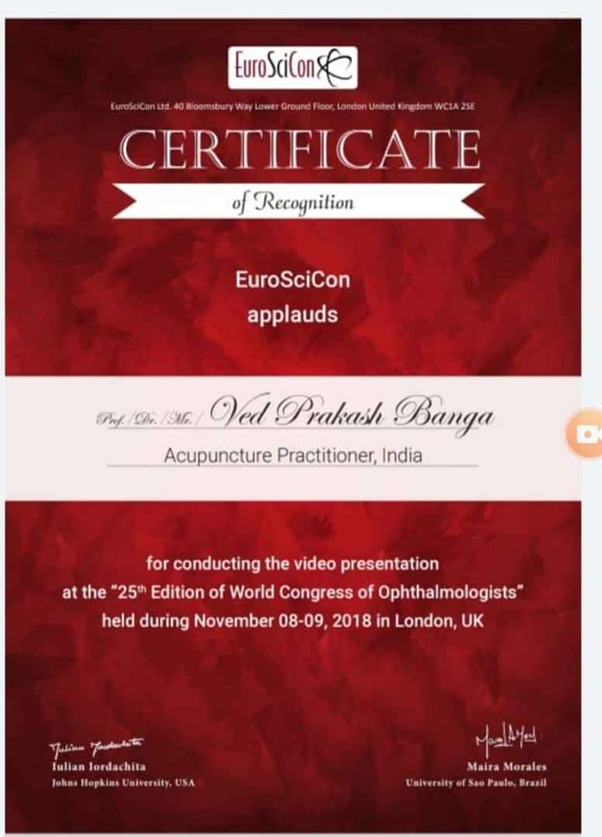
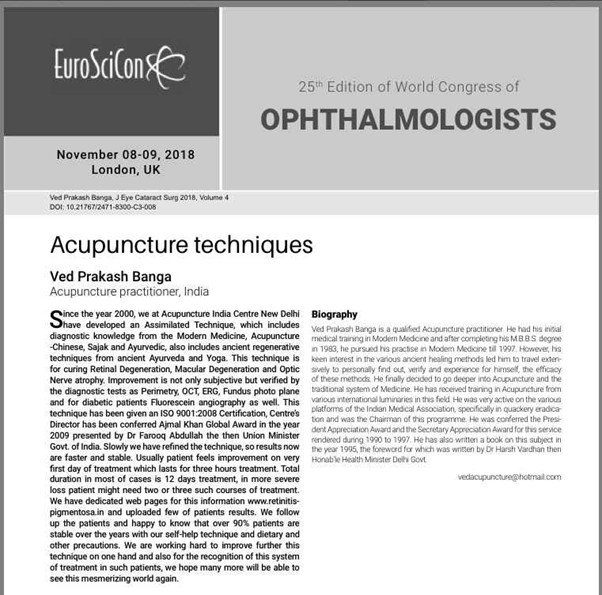
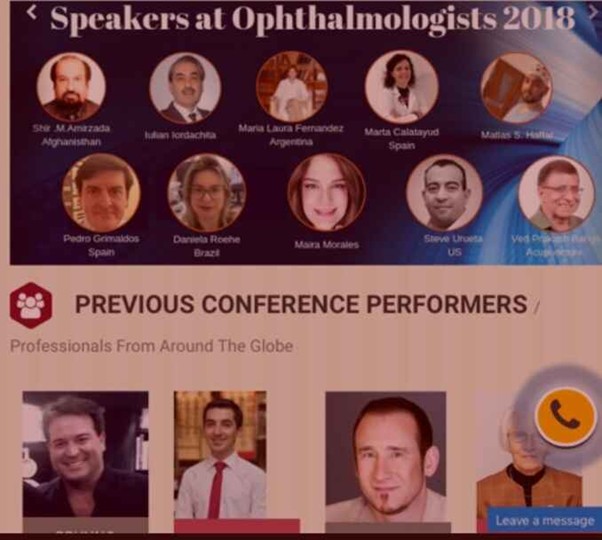
The treatment methodology developed here slowly over the years has been provided ISO Certification in the name of Assimilated Technique, which has been developed by assimilating knowledge from modern medicine, Traditional Chinese Medicine, Ayurveda and our own regenerative techniques. We have incorporated knowledge from Medical Astrology wherever possible. I have been invited to talk on this issue at the 5th Dry AMD &Geographic Atrophy Therapeutic Development Summit.
This has been slowly developed; in the initial stages, it took me around one year to heal such patients, but now it takes 12 to 15 days to heal.
Hope many more will see and will show the way of integration. Integration is more important.
.jpg)


.png)


